

Anemometers
Arklay S. Richards C5C Series Anemometers
If a C5C anemometer is struck by lightning, can the reed switch be replaced?
Answer
Yes. The reed switch cartridge assembly can be unscrewed from the anemometer housing and replaced in the field with a new one. This modular design allows for quick field service without replacing the entire anemometer.
What is the difference between the C5C63 and C5C65 anemometer models?
Answer
The difference lies in the wind cup rotor construction:
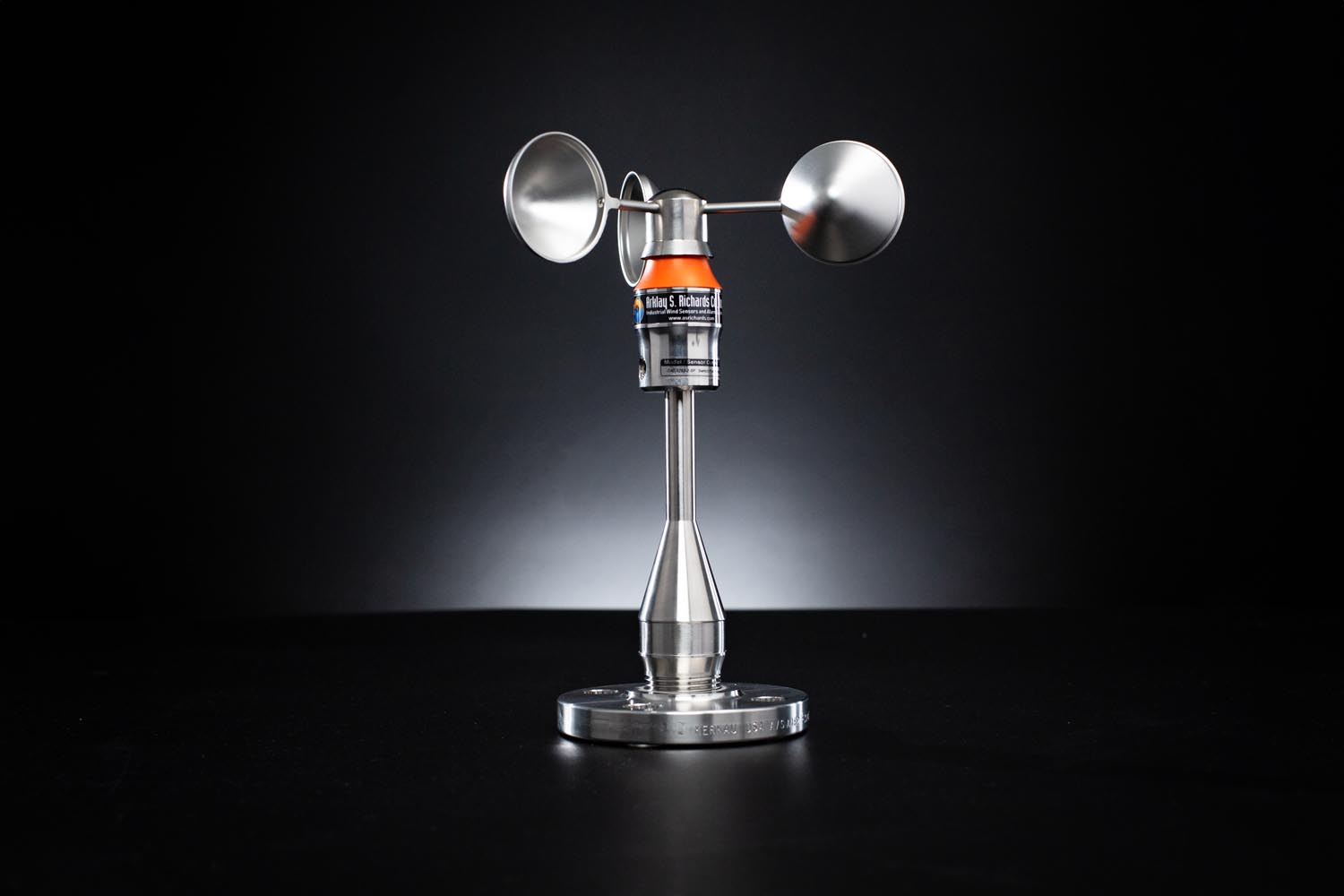
- The C5C63 uses incredibly strong deep drawn and welded stainless steel cups, creating a strong, lightweight, highly responsive rotor.
- The C5C65 uses a heavier one piece cast stainless steel cup and arm assembly, offering even greater durability and mass for harsh or high wind speed environments with the potential for impacts.
What are the advantages of the C5C63 and C5C65 rotor designs?
Answer
Both designs deliver accurate wind speed measurement in challenging environments, but each offers unique benefits:
C5C63 anemometer — Deep Drawn and Welded Stainless Steel Cups
- Lightweight and fast responding.
- Low inertia for quick reaction to changing wind conditions and wind spikes.
- Ideal for applications requiring sensitivity to low wind speeds and gusts.
C5C65 anemometer — One Piece Cast Stainless Steel Rotor
- Extremely rugged and impact resistant.
- Designed for long term durability in harsh or turbulent environments.
- The added mass provides natural damping of short gust spikes, reducing nuisance wind alarm triggers and improving stability in systems with shutdown relays.
What types of applications are C5C Series anemometer typically used for?
Answer
The C5C Series anemometer provides industrial grade wind speed measurement for cranes, mills, marine systems, and other wind alarm and shutdown system applications. Its rugged stainless steel and titanium construction with reliable switch pulse output make it ideal for environments where accurate, realtime wind data is essential in industrial and high wind speed applications.
How does the C5C series anemometer actually measure wind speed?
Answer
The C5C industrial anemometer uses a precision stainless steel and Titanium three cup rotor mounted on low friction bearings to convert wind motion into rotation. Inside the anemometer, a small permanent magnet passes a reed switch sensing element four times per revolution. Depending on the anemometer model, this produces one of two types of output signal:
- SwitchPulse (Reed Switch) Output Signal
As the shaft magnet inside the anemometer housing rotates past the reed switch, the magnetic field causes the switch contacts to momentarily close, generating a clean electrical pulse. The pulse frequency increases with wind speed, providing a simple, reliable signal for wind monitors and alarms such as the 490A wind alarm. - LowLevel AC Frequency Output Signal
In coil pickup versions, the rotating shaft magnet induces a tiny alternating voltage in the coil mounted inside the anemometer housing. The voltage amplitude is small, but the frequency is directly proportional to rotor speed, allowing controllers to measure wind speed by counting AC cycles.
Both output types convert the anemometer’s wind cup rotor speed into an electrical frequency that represents true wind speed, making the C5C anemometer compatible with a wide range of industrial wind monitors, displays and control systems.
What materials are used in the construction of the C5C industrial anemometer?
Answer
C5C series anemometers are precision CNC machined from stainless steel and titanium, providing exceptional durability in harsh weather and high wind environments. The design is engineered to withstand extreme wind conditions up to 230 MPH, making it suitable for exposed industrial and marine installations.
What is the difference between the C5C and C5CD series anemometer models?
Answer
The C5CD anemometer includes dual independent switch pulse outputs, allowing two separate systems to receive wind speed data simultaneously. This is ideal for redundant safety systems in container cranes and radial stackers, where one channel may feed an operator wind speed display and the second feeds a shutdown controller or wind alarm module.
Additionally, the C5CD anemometer features two separate signal cables, each terminated with its own M8 connector, providing fully isolated routing for dual channel installations and simplifying integration into high wind speed safety critical control systems.
Wind Alarms
Arklay S. Richards 490A Wind Monitor and Alarm
What does the 490A Wind Monitor and Alarm do?
Answer
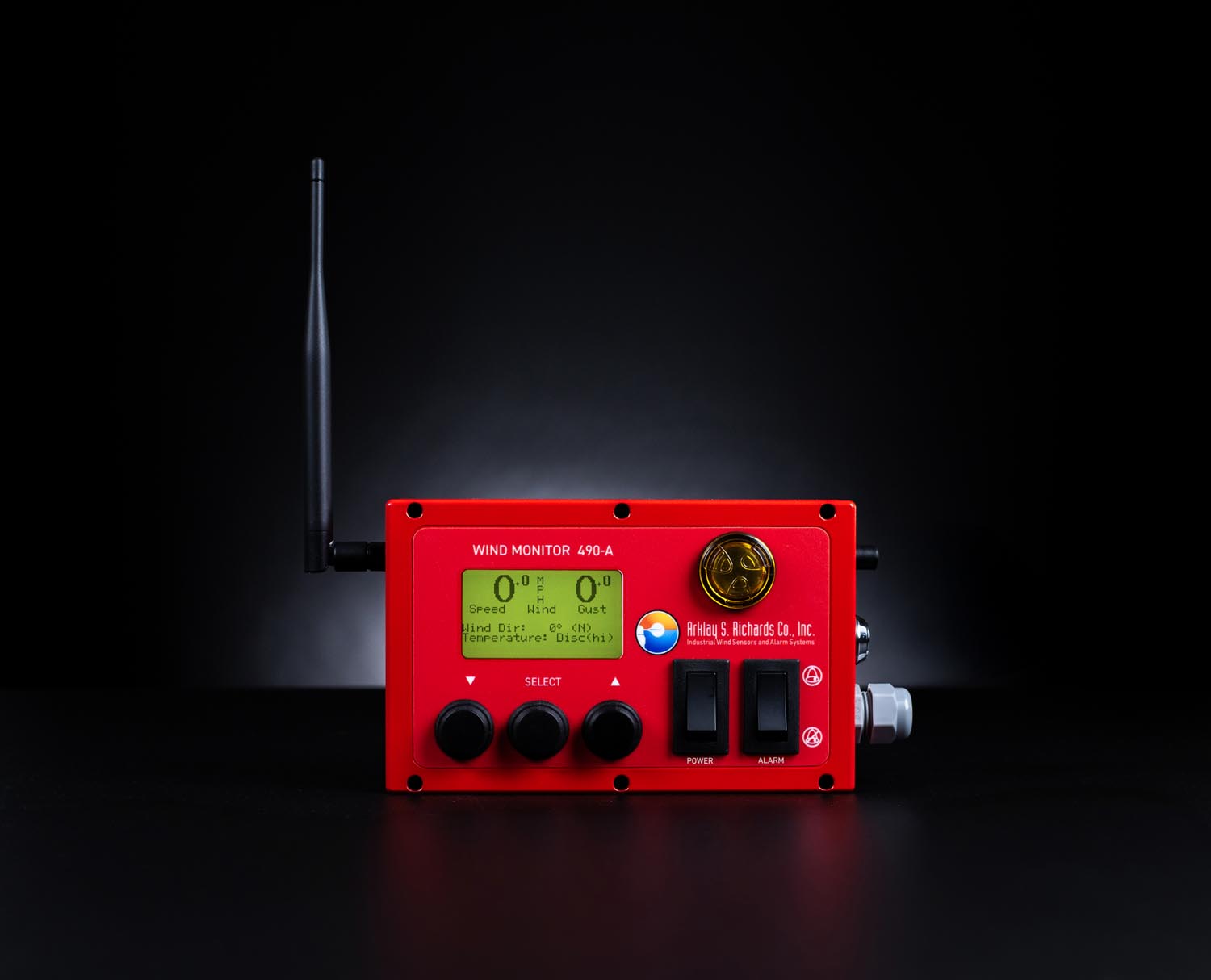
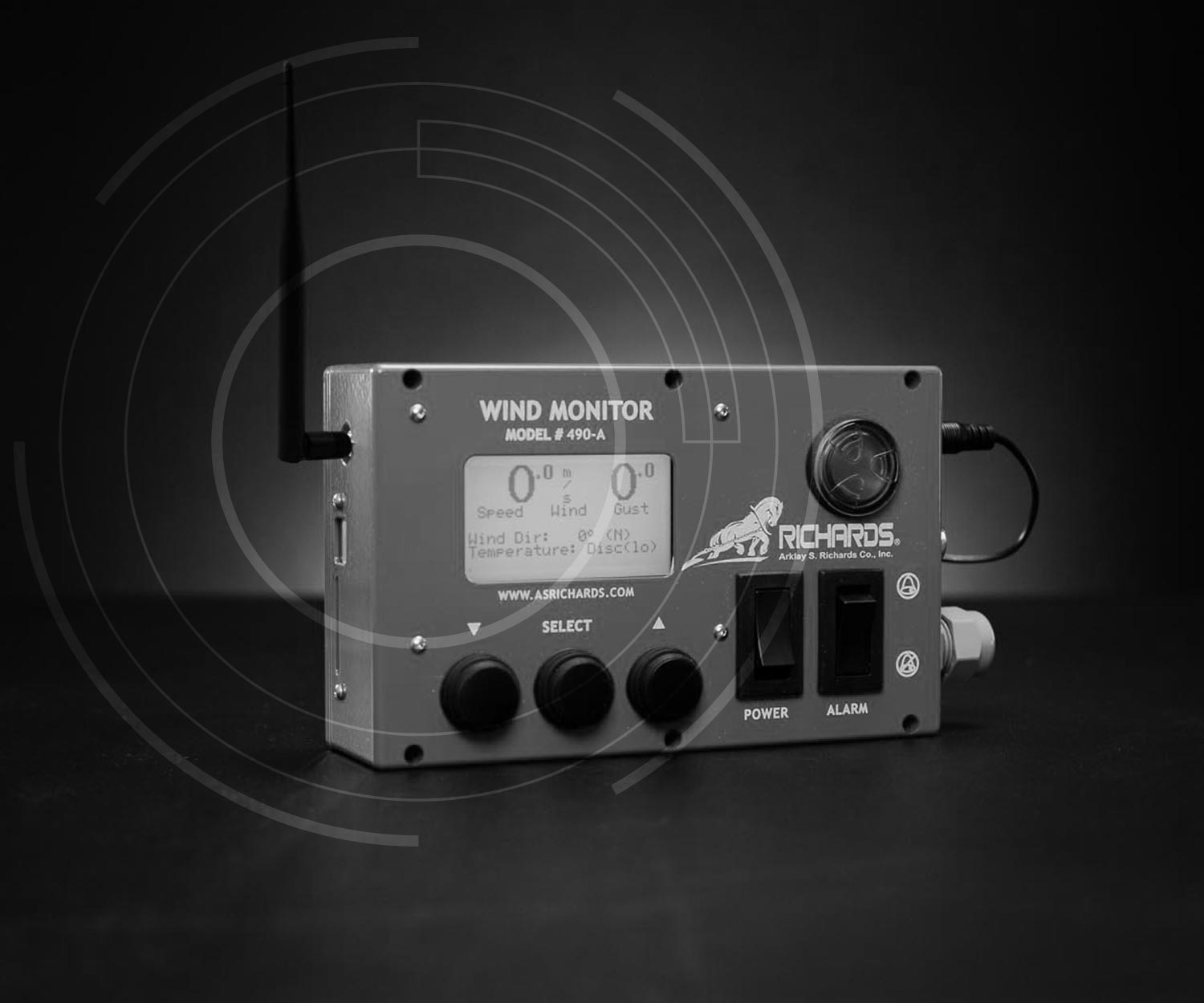
The 490A Wind Monitor/Alarm continuously tracks current wind speed, the maximum gust from the previous 60 seconds, and—when connected to the appropriate sensors—wind direction and temperature. When user defined thresholds are reached, the unit activates its builtin visual and audible alarms, and its onboard relay can automatically shut down heavy equipment or trigger a remote signal beacon during dangerous high wind conditions.
The monitor features a bright backlit LCD screen and an intuitive menu driven interface controlled by three front panel buttons. Users can configure units of measurement, sensor type, and alarm thresholds for wind speed, gust, and minimum/maximum temperature. All settings are protected by a physical key lockout.
In addition to hardwired sensors, the 490A supports wireless communication. 490-A Wind Monitors can operate as either a transmitter or receiver, enabling remote wind displays or integration with a wireless internet gateway for online monitoring through Richards Remote Monitoring Services. Wireless communication uses a 2.4 GHz 802.15.4 link with a typical range of 300 ft (90 m) line-of-sight, extendable with optional high gain antennas.
What types of sensors can be connected to the 490A Wind Monitor and Alarm?
Answer
The 490A Wind Monitor and Alarm is compatible with all C5 and C5C series anemometers that use switch pulse outputs for wind speed measurement. It also accepts a D5 or D5C wind direction vane with a 10 kΩ potentiometer output to display realtime wind direction. In addition, the monitor supports a high accuracy PT100 three wire RTD, enabling temperature display in either °C or °F.
What outputs and alarms do the 490A Wind Monitor and Alarm provide?
Answer
The 490A includes dual relay outputs that can be configured for high wind alarms, gust alarms, temperature thresholds, or external safety interlocks. These relays can also be used to trigger automatic shutdown of cranes or other equipment during high wind events, providing a reliable hardware level safety response. The unit’s builtin visual and audible alarms offer immediate local notification, while the relays allow seamless integration with industrial control systems.
How is the 490A Wind Monitor and Alarm installed and maintained?
Answer
The 490A Wind Monitor mounts easily in control panels or operator stations and requires straightforward hard wiring to the C5C series anemometer, D5C wind direction vane, RTD, and power source. Routine maintenance is minimal—periodic inspection of wiring, checking relay function, and verifying sensor operation ensures longterm reliability in demanding industrial environments.
Can an ultrasonic wind sensor be connected to the 490A Wind Monitor and Alarm?
Answer
Yes. The new 490AB Wind Monitor is compatible with FT702LT Ultrasonic Wind Sensors. Because the FT sensor measures both wind speed and wind direction, it can be used in place of a traditional anemometer and wind vane. The wiring diagram for connecting the FT Ultrasonic Wind Sensor is provided in Figure 6 of the 490-A Wind Monitor and Alarm manual.
Wind Direction Vanes
D5C & D5 Wind Direction Vanes
How do the D5C and D5 wind direction vanes measure wind direction?
Answer
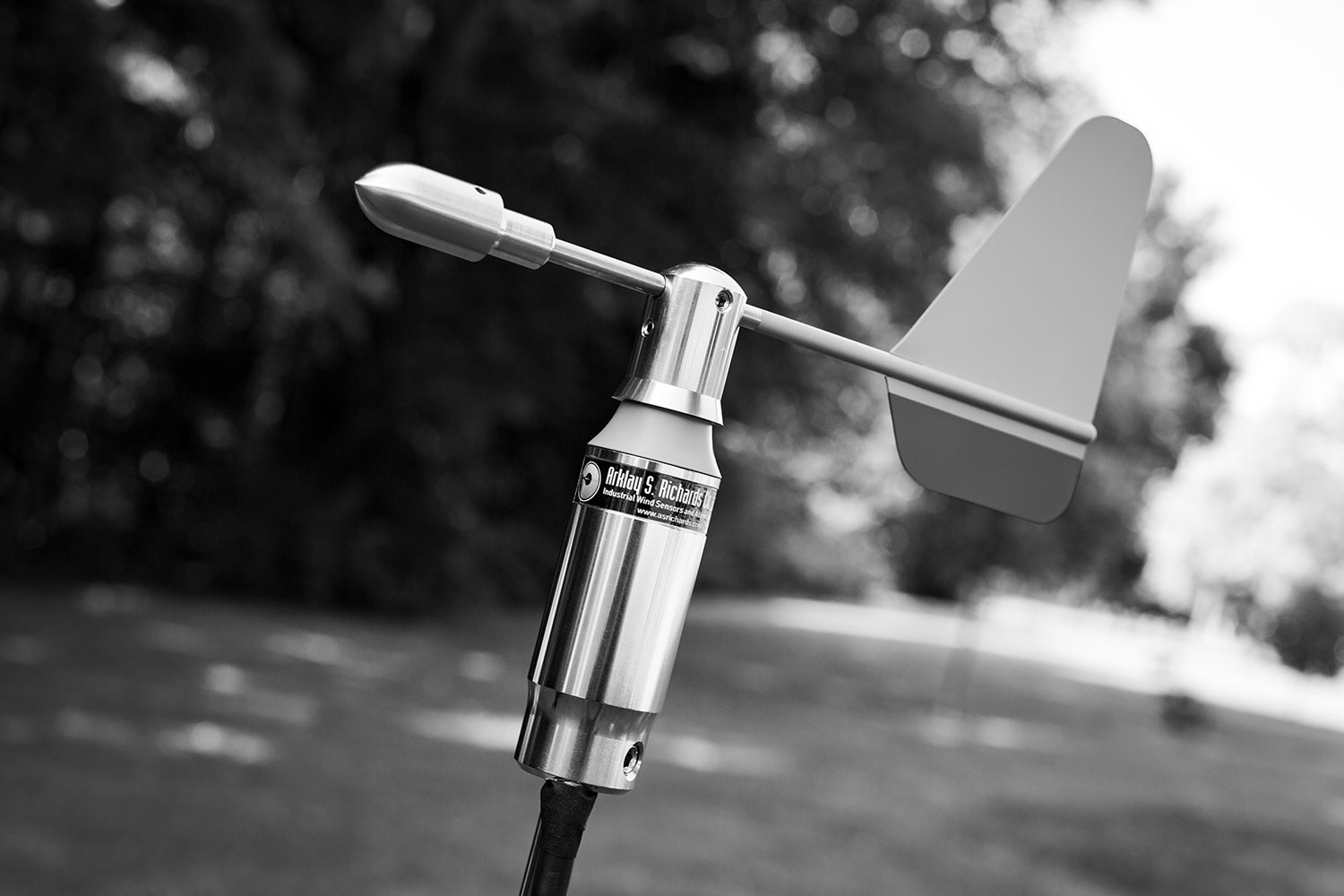
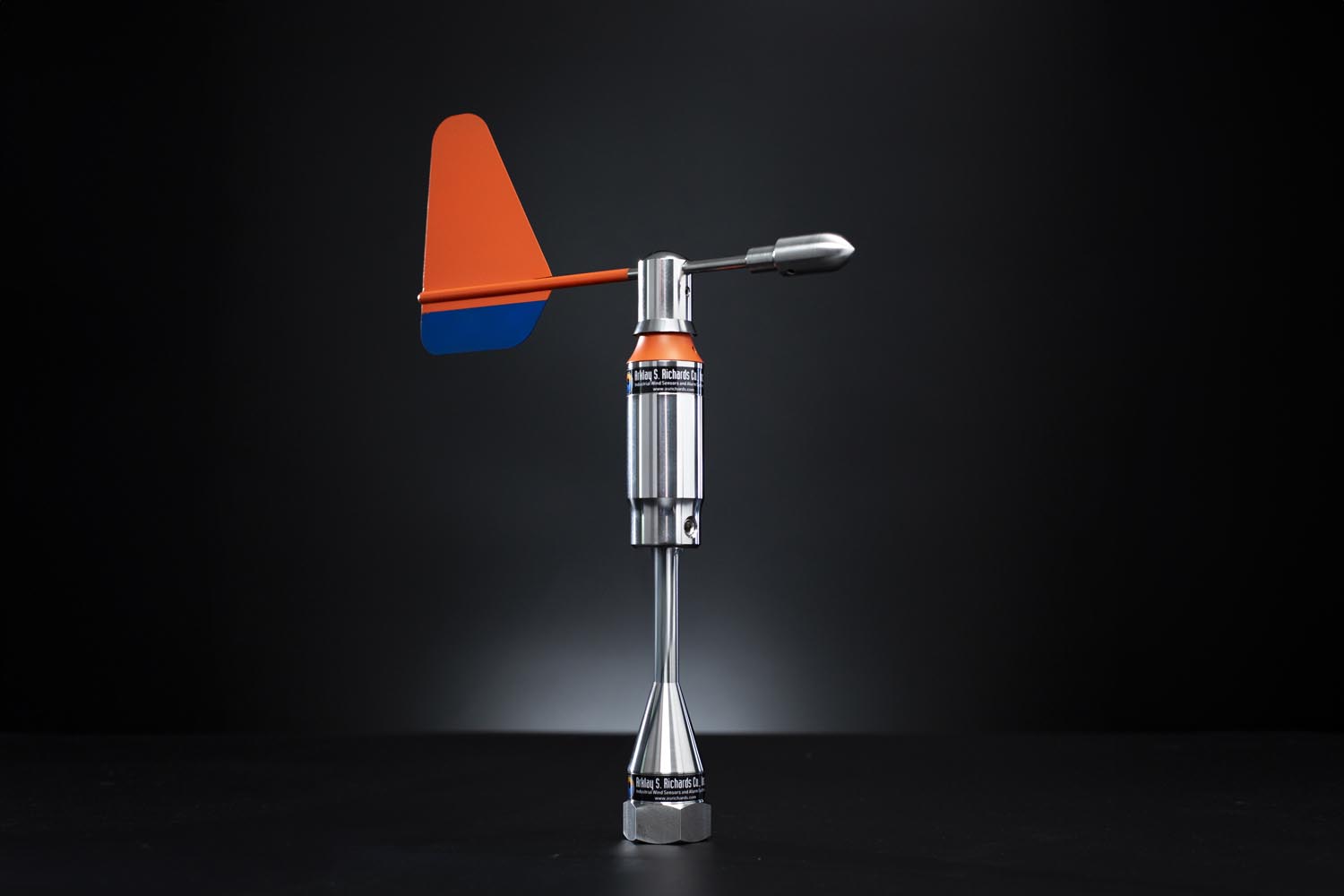
D5 and D5C series wind direction vane models use a precision balanced stainless steel vane assembly mounted on a stainless-steel shaft with ceramic ball bearings, ensuring exceptionally low friction and fast response to changing wind directions. A CNC machined stainless steel counterweighted pointer on the vane shaft provides accurate directional alignment, while the welded stainless-steel vane delivers longterm mechanical stability in harsh environments with high wind speeds.
What output signal do the D5C and D5 vanes provide?
Answer
The D5C and D5 wind direction vanes are available exclusively with a 10 kΩ potentiometer output, offering a simple, reliable, and widely compatible analog signal for the Richards 490-A industrial wind monitor, PLCs, and crane wind safety systems.
What maintenance is required for the D5C and D5 wind direction vanes?
Answer
These wind direction vanes are engineered for long service life with minimal upkeep. The ceramic bearings resist wear, corrosion, and environmental contamination, but periodic inspection of the vane assembly, cleaning of debris, and verification of electrical connections once or twice per year help ensure optimal performance in industrial, marine, and installations with high wind speeds.
How does the 10 kΩ potentiometer inside the D5C and D5 wind vane provide a wind direction measurement?
Answer
Protected inside the wind vane housing, the vane shaft is mechanically linked to a 10 kΩ rotary potentiometer. As the wind rotates the vane, the wiper inside the potentiometer moves along a resistive track. This movement changes the resistance between the wiper terminal and the fixed end terminals. Your monitoring system reads this varying resistance and converts it into a corresponding 0–360° wind direction value. Because the potentiometer is continuous and mechanically coupled to the vane shaft, the output changes smoothly and proportionally along with the vane’s physical orientation in the wind.
If you are looking for the finest industrial high speed wind sensors made, look no further.
With stainless steel and titanium construction, our anemometers outperform all others on the market. Current applications of our products include military and defense, asset protection, mining, oil rigs, meteorology, and much more.